
Four implants. One arch. One surgical day.
All-on-4 is a full-arch implant rehabilitation supported by four implants: two placed vertically in the front of the jaw, two placed at an angle toward the back. The angulation is the key idea: tilting the posterior implants makes use of dense anterior bone, lets the implant body extend further back along the jaw, and avoids the maxillary sinus and the inferior alveolar nerve. That avoidance is what makes grafting unnecessary for many patients who would otherwise need it.
The provisional prosthesis, fixed, screwed onto the implants, designed to look and function like a normal set of teeth, is delivered the same day for most cases at Revive. It’s designed from your surgical scan and milled in our in-house lab while the surgical phase is underway. You walk out of the office with teeth, not with a recovery plan and a wait.
It is part of the broader full-arch rehabilitation menu. It is not the right answer for every full-arch patient, which is the whole point of having All-on-X and zygomatic options available in the same building.
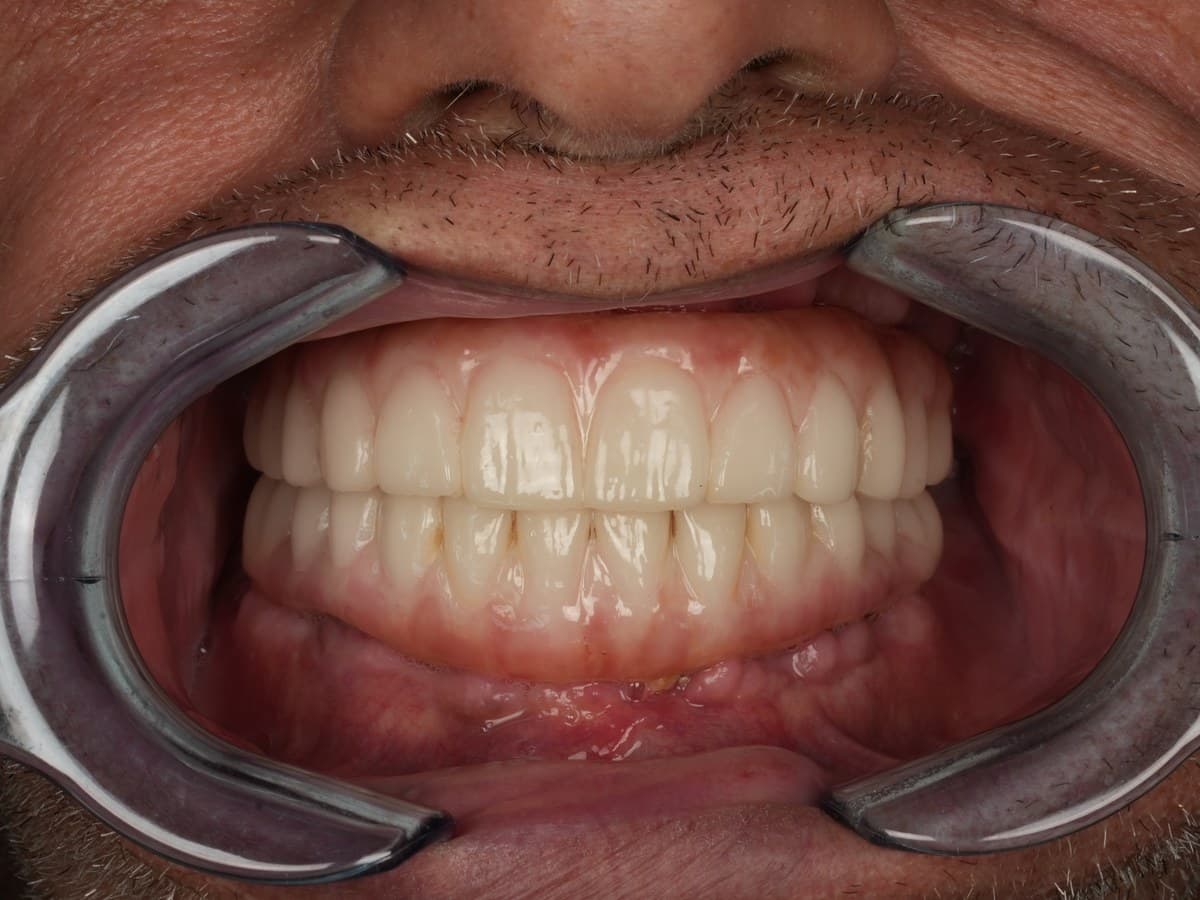
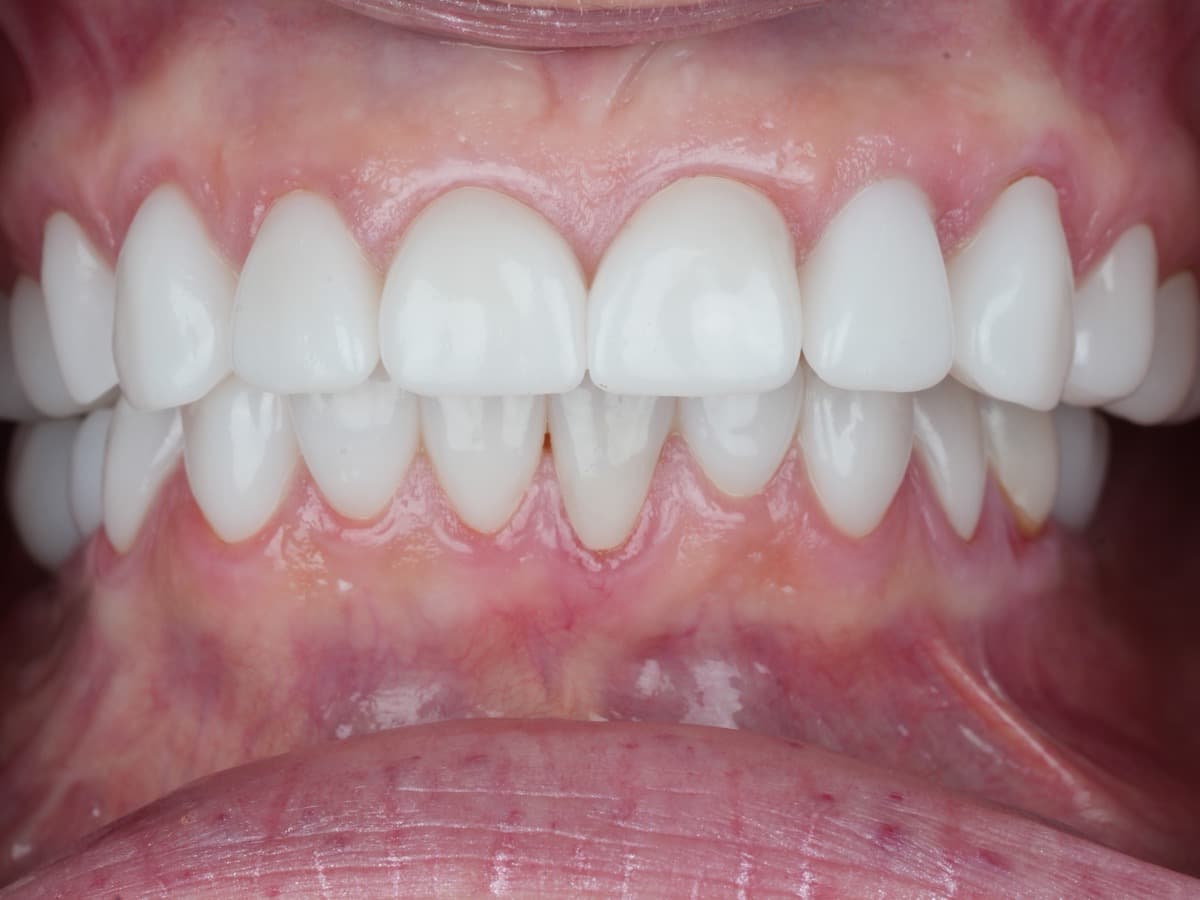
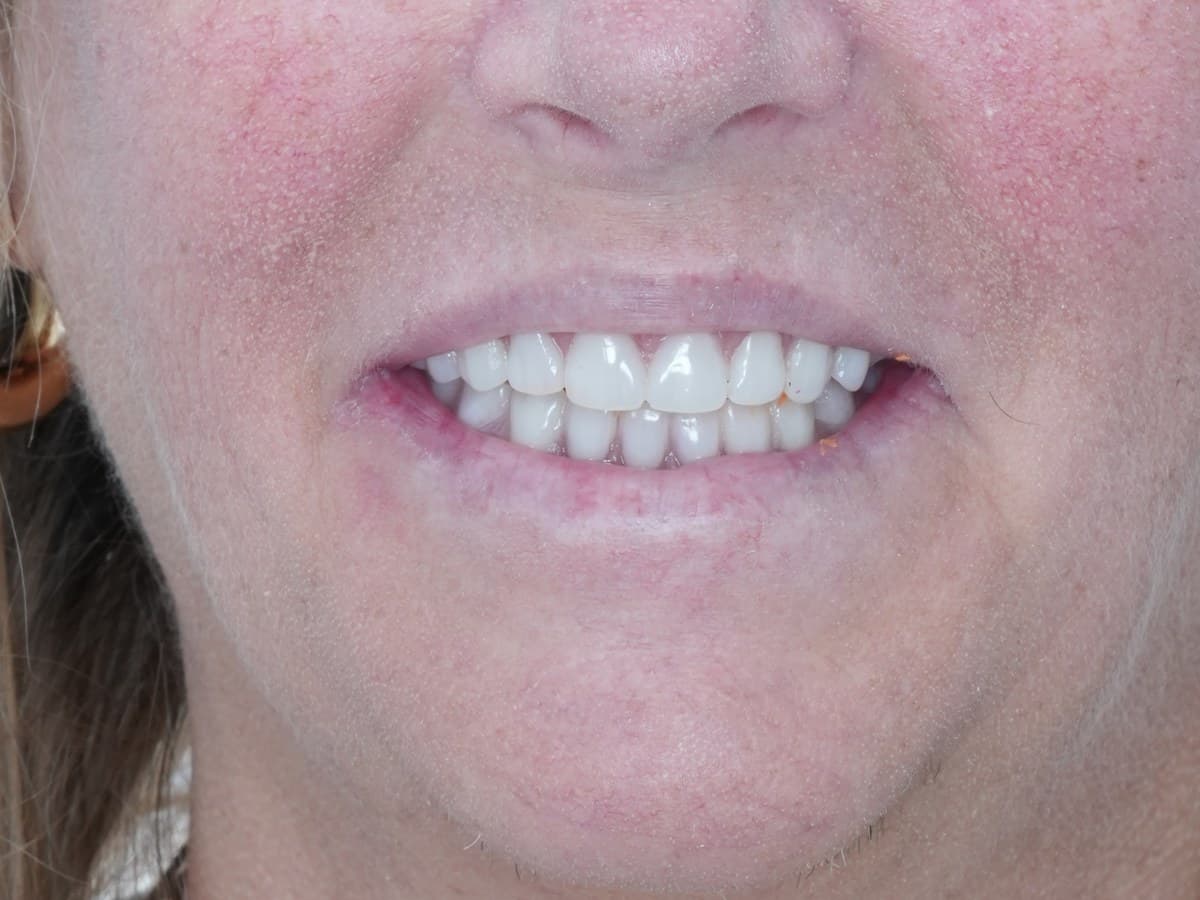
And who isn’t.
Good candidates
Patients with a failing or missing arch of teeth and reasonable bone in the front of the jaw. Reasonable means: enough bone height and width in the anterior region to seat the two axial implants, plus enough remaining bone along the alveolar ridge to place the angled posterior implants at adequate length. The CBCT scan tells us this in minutes.
Patients tired of dentures, including the daily compromise, the adhesive, the food avoidance, and the way removable plates move when speaking, are particularly well-served by All-on-4. The bite force restored by a fixed implant-supported arch is closer to natural dentition than to anything removable.
Not candidates (without modification)
Patients with severe upper-jaw resorption, where the bone in the maxilla is too thin or too far back to seat reliable implants even at angulation. For most of these patients, zygomatic implants are the right answer.
Patients with very high bite force, significant parafunctional habits (clenching, grinding), or a heavily restored opposing arch. Four implants can carry the prosthesis under normal load; under exceptional load, the biomechanics ask for more anchorage, which is where All-on-X comes in.
How a surgical day actually runs.
Pre-op. Check-in, vitals, sedation consent confirmed, IV access placed by the anesthesiologist. You’re in the operatory within 30 minutes of arrival.
Anesthesia and surgery. IV sedation or general anesthesia, delivered in-house. Failing teeth (where present) are removed and the surgical sites prepared. Four implants are placed, two anterior axial, two posterior angled, guided by the digital plan we built from your CBCT. Soft tissue is closed around the implant connections. Total surgical time runs 2–4 hours for most cases; longer if extensive extractions are involved.
Lab handoff and provisional. An impression of the implant positions is taken intraorally while you’re still in the chair. The provisional prosthesis, designed from the surgical scan, is milled and finished in our lab during the same window. See the lab page for the workflow detail.
Seating and recovery. The provisional is seated, the bite is verified, minor adjustments made. You recover from sedation, eat something soft, get written post-op instructions, and go home with someone who can drive. Most patients are home by mid-afternoon.
See sedation & anesthesia for the anesthesia side of the day.
When to add implants.
The most useful clinical question in full-arch planning isn’t “is All-on-4 possible?” It’s “is four enough?” Four well-placed implants will support a fixed arch under normal load for most patients. Where the biomechanics flag risk, the answer is to add anchorage.
The four variables we look at: bone density (D1–D4 classification, softer bone may ask for more implants to spread load), bite force (heavier bite, more anchorage), opposing dentition (a natural-dentition opposing arch loads the prosthesis differently than another full-arch), and parafunctional habits (clenching, grinding, bruxism). When any of those tilt the case, All-on-X, five, six, or more implants, is the right answer.
The good news: the surgical and lab workflow is the same in either case. The decision is made before surgery, with the imaging in front of us, and you’ll know which you’re getting and why.
Three to six months, then the final teeth.
The integration period, when the implants fuse with bone, runs three months for most lower-jaw cases and four to six months for upper-jaw cases. During that period you wear the provisional, which is functional but transitional by design. Diet is soft for the first 6–8 weeks, then gradually expanded.
Once integration is confirmed (clinical check plus imaging where indicated), the final prosthesis is designed. Most All-on-4 finals at Revive are monolithic zirconia: strong, aesthetic, low-maintenance, and milled in-house. For specific cases (high bite force, certain prosthetic preferences), a hybrid acrylic-on-titanium prosthesis is the right answer. The choice is part of the planning conversation.
For long-term maintenance, see implant aftercare.
What’s in the All-on-4 quote.
Surgical placement of the four implants, IV sedation or general anesthesia from our in-house team, the same-day provisional prosthesis, the final monolithic zirconia or hybrid prosthesis, all in-house lab work, and post-operative follow-up through integration. No separate facility fee. No surprise anesthesiologist bill. No third-party lab surcharge. The full range, financing terms and pre-qualification flow are on the cost & financing page.